Committees
In the spirit of hosting our conference at the beginning of the year, PHSMUNC is committed to offering committees for all MUN levels. Our GA is recommended for beginners, Specialized is recommended for novice delegates, and due to the fast-paced and challenging nature of the committee, Crisis is reserved for advanced participants. That being said, all delegates are encouraged to branch out of their comfort zones and explore! We hope our committees provide an outlet for your creativity.


General Assembly
- Economic and Financial Committee (Second Committee)
Topic 1: Deep Sea Mining and Biodiversity
Deep-sea mining is emerging as a potential source of valuable minerals needed for renewable energy technologies, but it poses severe risks to fragile marine ecosystems. Scientists warn that mining activities could permanently damage biodiversity in regions of the ocean that are still largely unexplored. Many nations see deep-sea mining as an economic opportunity, while others call for moratoriums to protect the global commons. The debate centers on whether international regulation can balance economic demand with the protection of ocean ecosystems.
Topic 2: Arctic Oil Exploration and Melting Ice
The rapid melting of Arctic ice is opening access to previously unreachable oil and gas reserves, raising both economic hopes and environmental concerns. Exploiting these resources could intensify climate change and disrupt fragile polar ecosystems already under stress. At the same time, competition for Arctic resources heightens geopolitical tensions among coastal states and global powers. Delegates must consider how to reconcile the economic interests of nations with the urgent need to mitigate climate impacts and preserve the Arctic environment.
Specialized
- The 2008 Mortgage Crisis
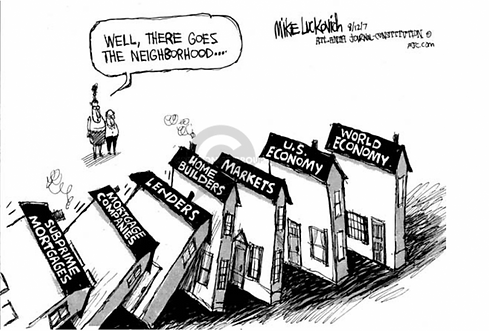
In 2008, the largest U.S. market crash since the Great Depression left the U.S. on uncharted territory with rampant foreclosure rates and unemployment rates. The Mortgage Crisis of 2008 Committee will combine both commercial and government interests in considering damage relief to both corporations and individuals, accountability for the crash of the stock market, and the prevention of future crashes. Members will engage in rigorous discussions to assess the scope of accountability among key figures within financial institutions, regulatory bodies, and other sectors that contributed to systemic corruption. Delegates will also explore critical questions regarding the balance between ensuring justice for those adversely affected by the crisis and maintaining the stability of the economy moving forward.

Crisis
- OpenAI at a Crossroads
The year is 2027, and ChatGPT is approaching the point of singularity – the point where artificial intelligence begins to surpass human intelligence and starts improving itself, potentially leading to disastrous consequences.
As the board of directors for OpenAI, you face the decision of pushing forward to achieve the greatest technological achievement of humanity, or stopping the advancement to preserve humans’ superiority over AI.
But owning one of the most advanced LLMs comes with a multitude of un-technical related challenges too. Poaching, whistleblowers, government watchdogs, and more are weakening the trust between your fellow board members and employees in the company.
Now, as Sam Altman increasingly conflicts with the Board and more of OpenAi’s top engineers are poached by Meta, you face difficult decisions regarding the future and ethicality of ChatGPT. Who will decide how far AI can go? How should transparency and ethics play into the development of such powerful technologies? And most importantly: will you allow ChatGPT to reach the point of singularity?